


Head of the Institute of Legislative Ideas, Tetiana Khutor, took part in an international conference organized by B4Ukraine
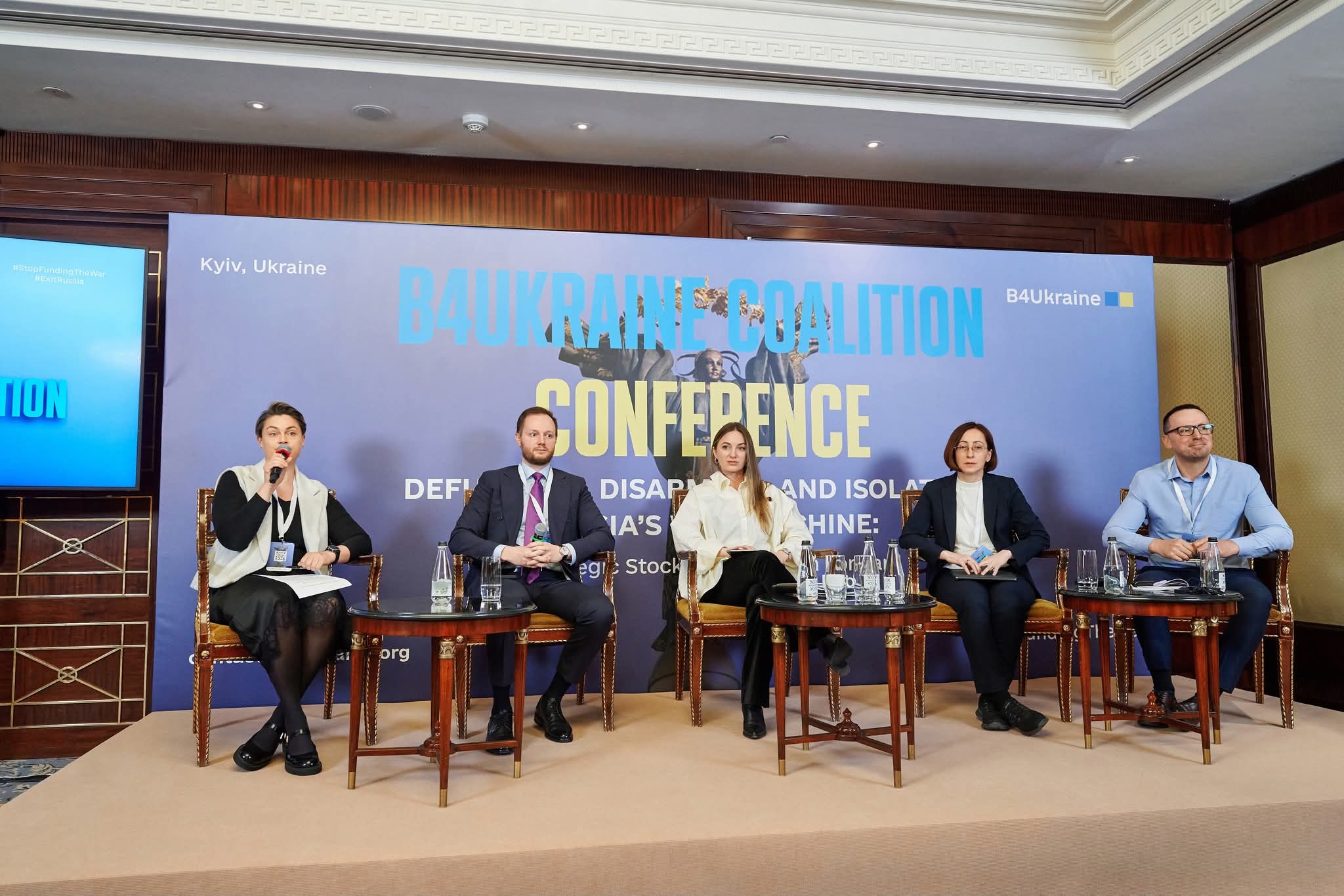
Confiscated assets of sanctioned individuals and fines for sanctions violations can serve as an effective tool for compensating the damage inflicted on Ukraine and restoring justice. This was stated by Tetiana Khutor during the international conference.
“This concerns mechanisms for mobilizing assets linked to sanctions, including $300 billion in state assets and $100 billion in private assets, special confiscation instruments, as well as confiscated assets and fines for sanctions violations. The possibility of using these funds as a form of collateral for future reparations is also being considered,” the expert noted.
According to her, several countries have already introduced mechanisms for transferring funds to Ukraine and special tools for asset seizure. In particular, Canada applies the Special Economic Measures Act (SEMA), under which the An-124 “Ruslan” aircraft (Volga-Dnepr) was seized and confiscation proceedings were initiated. At the same time, Estonia has a law on international sanctions, although its practical application remains limited.
Tetiana Khutor also referred to the key legal principle “Damnum culpa datum restitui debet” (damage caused by fault must be compensated) and outlined relevant provisions of EU directives. Specifically, Article 10 of Directive 2024/1226 regulates the freezing and confiscation of assets, while Article 19 of Directive 2024/1260 encourages member states to transfer confiscated assets, proceeds, and property linked to sanctions violations or circumvention to support third countries.
“A notable example of implementing these directives is Lithuania, which amended its legislation on development cooperation and humanitarian aid. Under these changes, confiscated property and fines for sanctions violations are directed to a dedicated fund supporting Ukraine’s reconstruction and post-war recovery. In particular, €167,000 in fines was allocated to the rehabilitation of Ukrainian veterans,” Tetiana Khutor explained.
She also highlighted the approach of the United States, where legislative changes already allow confiscated assets of sanctioned individuals to be transferred to Ukraine. One example is the transfer of $5.4 million confiscated from Konstantin Malofeev to support reintegration and rehabilitation programs for veterans. Additionally, Estonia transferred around $500,000 to support damage assessment and repairs of Ukraine’s energy infrastructure.
“To ensure the effective use of this instrument, it is necessary to criminalize sanctions violations, introduce administrative liability, and adopt legislation governing the distribution of confiscated assets and fines in favor of affected parties,” Tetiana Khutor emphasized.