


ILI held an expert discussion with the participation of representatives of state authorities, the Register of Damage, and civil society organizations
The problem of documenting health damage sustained by Ukrainian civilians wounded as a result of Russia's full-scale invasion is systemic and requires a comprehensive response. This was the key message of the public presentation of the study "Documenting Health Damage to Civilians Caused by Russian Aggression: Challenges of Establishing War-Related Disability and Ways to Overcome Them," conducted by the Institute of Legislative Ideas with the support of the International Renaissance Foundation.
The event brought together nearly a hundred representatives from the Verkhovna Rada of Ukraine, the Ombudsman's Office, the Register of Damage caused by the Aggression of the Russian Federation against Ukraine (RD4U), the Office of the Prosecutor General, as well as civil society and human rights organizations. The goal was not only to outline the problems faced by victims, but to jointly discuss solutions that could change this policy.
ILI Chair Tetiana Khutor, opening the event, noted that the Institute of Legislative Ideas has been working since 2022 on holding the aggressor state financially accountable. She emphasized the need to direct Russian assets toward compensating the damage caused to Ukraine and to those affected.
"A prerequisite for both compensation payments and advocacy for sanctions and the seizure of Russian assets is proper documentation of damage. It is also necessary for preserving historical memory and countering the distortion or denial of war crimes in the future. That is why, with the support of the International Renaissance Foundation, we launched this study. We found that the national damage documentation mechanisms contain a number of flaws that create obstacles for victims and limit their access to assistance and support," said Tetiana Khutor.
She added that as part of the study, ILI analyzed the legislative framework for the status-granting procedure, obtained information from authorized state bodies, and examined foreign experience as well as the experience of human rights organizations supporting victims. The findings revealed a gap between the scale of harm suffered by civilians and the actual number of people who go through the war-related disability determination procedure.
"Establishing such a status is one of the primary instruments of state confirmation of health damage, and one of the reasons for this gap lies precisely in the shortcomings of the existing mechanism," the ILI Chair emphasized.
During the first part of the event, ILI Project Manager Andrii Klymosіuk presented the study on the documentation of health damage to civilians resulting from Russian aggression – through the instrument of establishing war-related disability. He noted that, according to UN estimates, in 2025 alone, more than 12,000 civilians sustained physical injuries – 70% more than two years prior. Yet over the entire period from 2022 to 2025, only 1,437 people applied to the Interdepartmental Commission, which establishes the connection between disability and the war. This chasm between the actual scale of harm and the number of those who were able to complete the procedure is the very essence of the problem.
"Proper documentation of damage is not a formality. It is a prerequisite for victims to exercise their right to assistance, rehabilitation, and compensation. For civilians, the status of a person with war-related disability is one of the few available instruments for documenting health damage at the national level. It confirms that the harm was caused specifically as a result of hostilities, and this is critically important for accessing state benefits and compensation," said Andrii Klymosiuk.
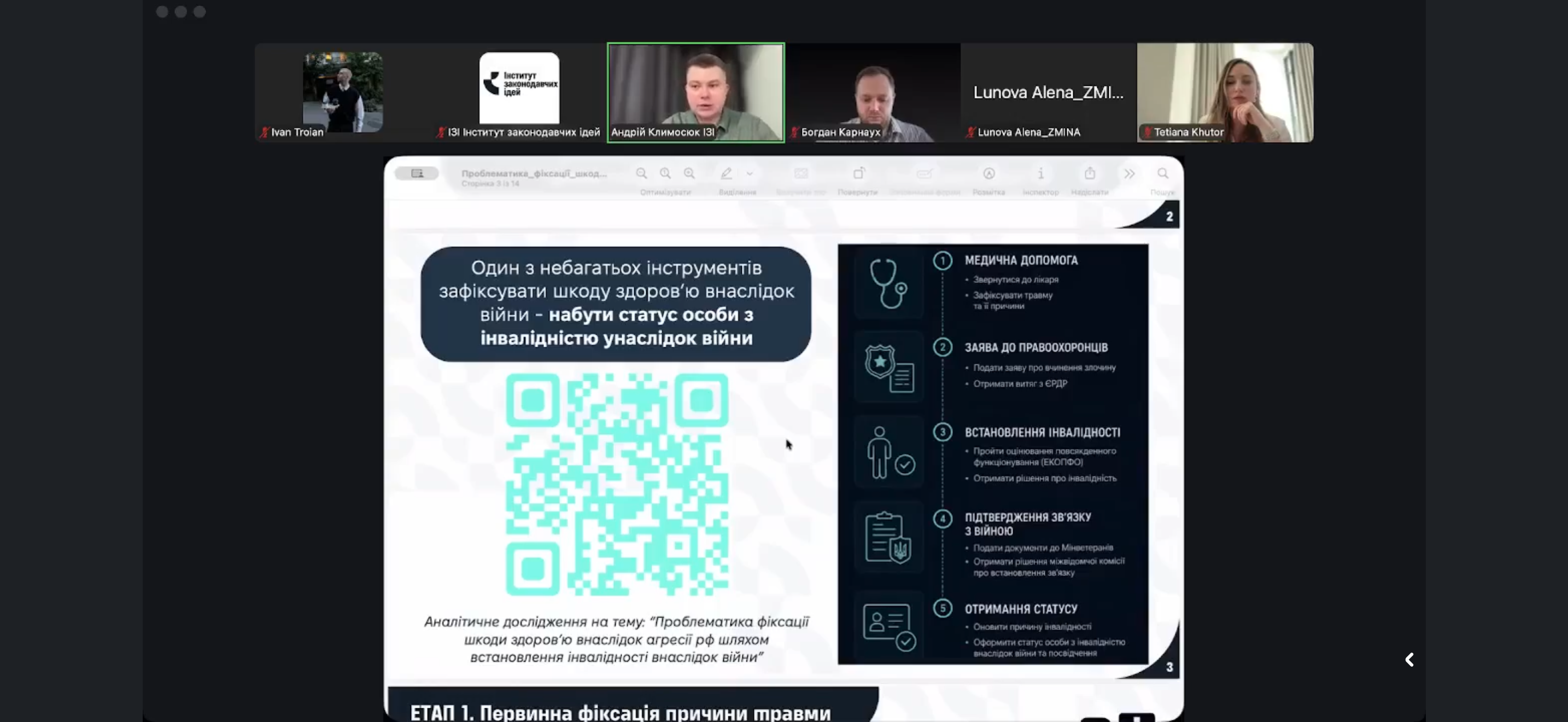
He outlined five mandatory stages – from hospital to certificate – that turn the process of obtaining war-related disability status into a months-long marathon of interactions with various authorities. At every step, a victim may encounter incorrectly completed documents, inaction on the part of investigators, or overburdened expert institutions. And all of this affects people who have just experienced the most difficult moments of their lives.
"Out of 347 refusal decisions, 221 were issued specifically on the grounds of missing documents confirming the fact of injury. The forensic examination is initiated by an investigator or prosecutor, not by the victim – and investigators regularly ignore the relevant petitions. If the investigator fails to act, the victim is simply blocked. Without a forensic medical examination conclusion, there is no alternative," the ILI Project Manager noted.
Andrii Klymosiuk proposed three key changes on which the national mechanism for documenting health damage and establishing war-related disability status should be based: reducing the procedure's dependence on criminal proceedings, revising the grounds for denying disability status, and establishing a clear deadline for revoking previously issued decisions of the Interdepartmental Commission. The expert also drew attention to the fact that victims can already apply to the international Register of Damage for Ukraine, using a practical guide developed by ILI on the basis of official Register documents.
Anastasia Shepelenko, Head of the Legal Department of the civil society organization "Desyate Kvitnya" (April Tenth), spoke about the systemic problems in supporting victims. According to the lawyer, civilians affected by Russian aggression in Ukraine face multi-layered bureaucratic obstacles on the path to obtaining war-related disability status. From improper documentation in medical facilities to protracted criminal proceedings – each stage can drag on for months and years, exhausting people who have already endured severe injuries. Without legal support, most of them are simply unable to navigate this path on their own.
"A person has had both limbs amputated above the knee. Despite the severity of the injury, the process of referral for assessment of daily functioning can drag on for nearly eight months due to improper preparation of initial medical documentation. Sometimes people simply run out of strength, no longer want to move forward or appeal anything. It is fortunate when a lawyer or case manager is nearby to help and support the person through every stage," Anastasia Shepelenko remarked.
Representatives of state bodies working on the protection of civilian victims also shared their expertise. Pavlo Frolov, Member of Parliament of Ukraine and Chair of the Inter-Faction Parliamentary Association "Protection of the Rights of IDPs and Other Victims of Russian Aggression," spoke about systemic gaps and the need for new support mechanisms in this area. As the parliamentarian noted, despite the adoption of a number of laws and parliamentary committee decisions, systematic support for civilian victims of Russian aggression in Ukraine remains on paper. The register of non-property damage is not being maintained, a dedicated law has not been developed, and the Ministry of Social Policy, which is responsible for this process, spent years unable to define its own powers.
"People who have suffered terrible injuries and lost children are, unfortunately, not adequately covered by state support. Systematic accounting of all non-property damage caused by Russian aggression is a very important instrument for restoring justice. The law on the national damage accounting system has been adopted, but a law on support for victims has still not been developed. While they were figuring out whose responsibility it was – time was lost," said Pavlo Frolov.
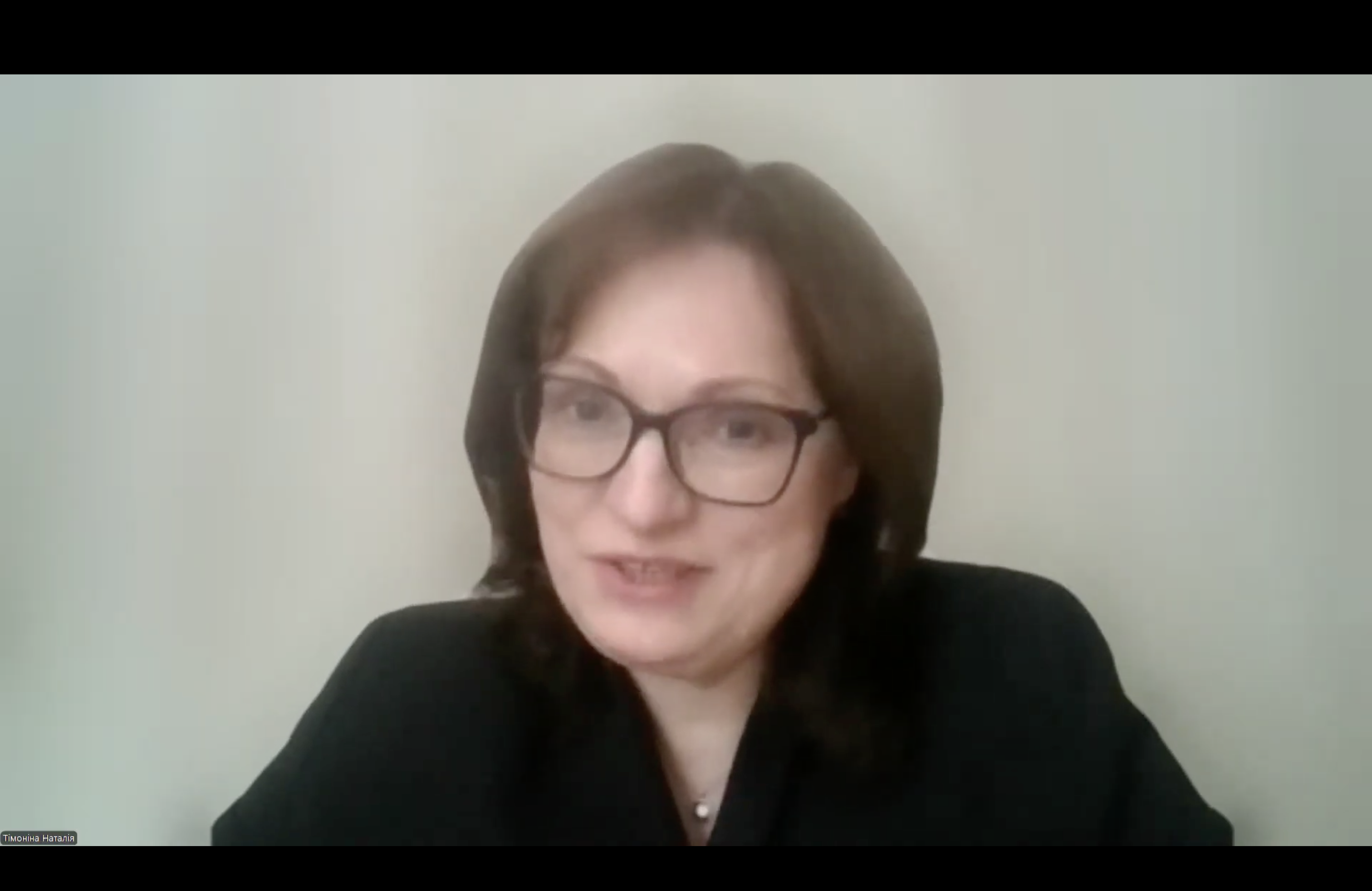
Natalia Timonina, Deputy Head of the Division of the Secretariat of the Ukrainian Parliament Commissioner for Human Rights and member of the Interdepartmental Commission under the Ministry of Veterans' Affairs of Ukraine, spoke about key procedural problems and the need for systemic change. She pointed out that the current legislation on the status of persons with war-related disabilities was designed for military personnel and is poorly adapted to the realities of civilian victims. Even once the status is granted, a person is forced to once again prove their right to benefits across dozens of institutions. The solution is a unified database and systematic support similar to what already exists for veterans.
"Every case has to be pieced together bit by bit, and this comprehensiveness should simplify things for the person – not just in terms of collecting paperwork, but so that if a person approaches an investigator, the mechanism works like clockwork without a single refusal. A unified database of persons with war-related disabilities needs to be established – just as the unified veterans' database currently operates. So that it is not the person running after state institutions, but the institutions that are open to people and do everything possible so that this person feels the support of the state," Natalia Timonina stressed.
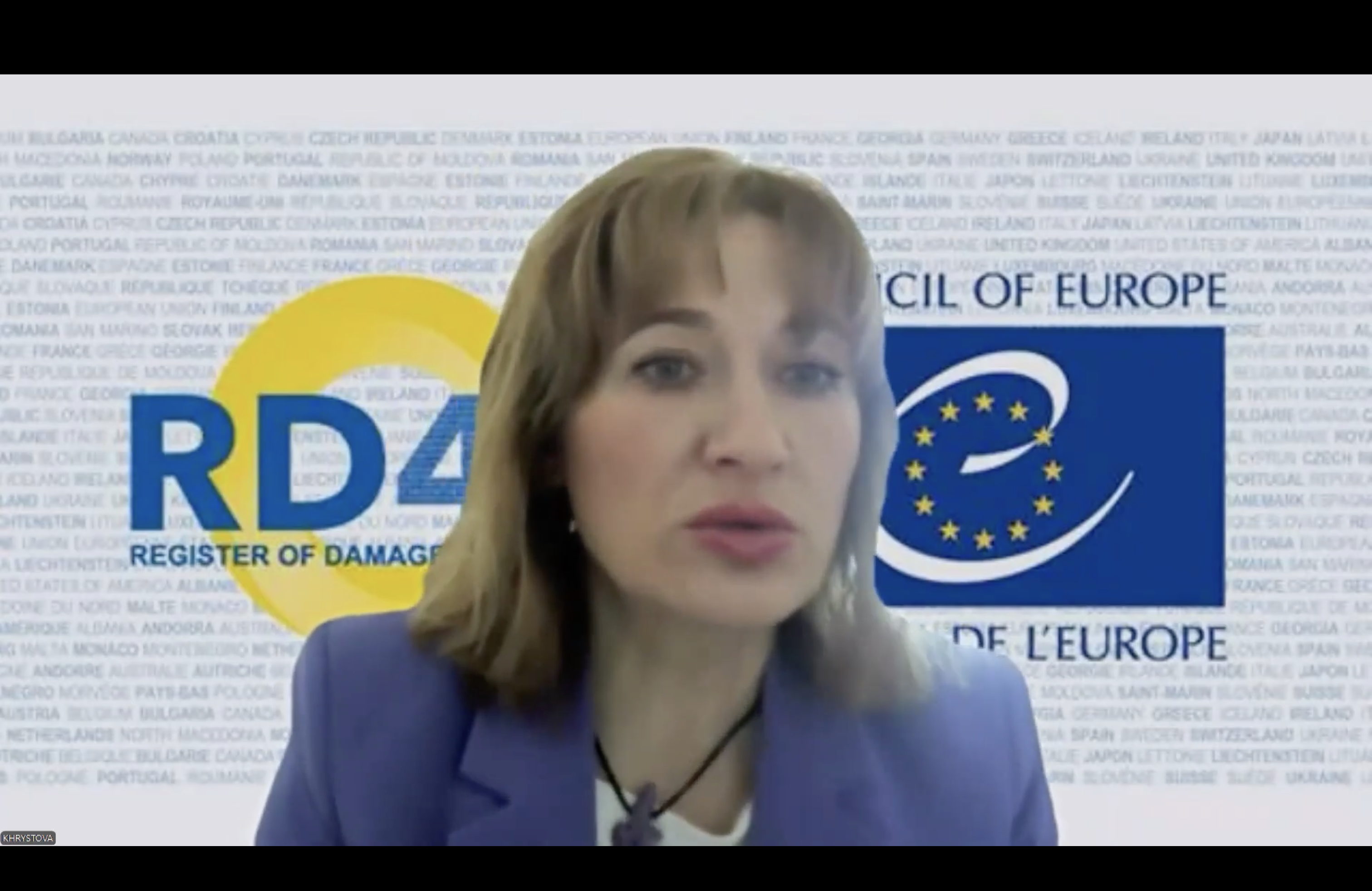
During the second part of the event, representatives of the Register of Damage caused by the Aggression of the Russian Federation against Ukraine (RD4U) explained how victims can already document the harm done to them through the international mechanism. According to Hanna Khrystova, Head of the Kyiv Office of the Register of Damage for Ukraine, RD4U has already received more than 150,000 applications and represents a first step toward receiving compensation from the aggressor state. However, most victims still do not know about this opportunity, or fear that without a complete package of national documents their application will be meaningless. In reality, the Register accepts any available evidence, and submitting an application does not preclude simultaneously pursuing national procedures.
"The applicant does not have to choose: they can go through all available national stages and, at any point along the way, submit an application to the International Register of Damage, attaching whatever documents they currently have. If a person cannot confirm war-related disability through national documents, they describe their situation accordingly and attach the evidence available to them. The entire mechanism – from application registration to compensation payments – will operate as quickly as possible given the conditions of a full-scale war," Hanna Khrystova explained.
Ihor Karaman, Legal Adviser at the Kyiv Office of the Register of Damage for Ukraine, spoke about submitting an application to the International Register of Damage under category A2.3 "Serious Personal Injuries" through the Diia web portal. According to him, the Register uses its own autonomous definition of serious injuries, which is independent of Ukrainian medical or legal qualifications, and the absence of documents is not grounds for refusal. The key is to describe the event and provide any available evidence, even if that consists solely of witness testimony.
"If the relevant person cannot confirm the injury with medical documents, they describe their situation as best they can and attach whatever testimony is available. If, according to Ukrainian documentation, the injuries are classified as minor, this does not mean the situation is automatically excluded from the scope of the serious personal injuries category. The applicant themselves decides whether the injuries have significantly affected their quality of life, and accordingly decides whether to submit an application to the Register," Ihor Karaman explained.
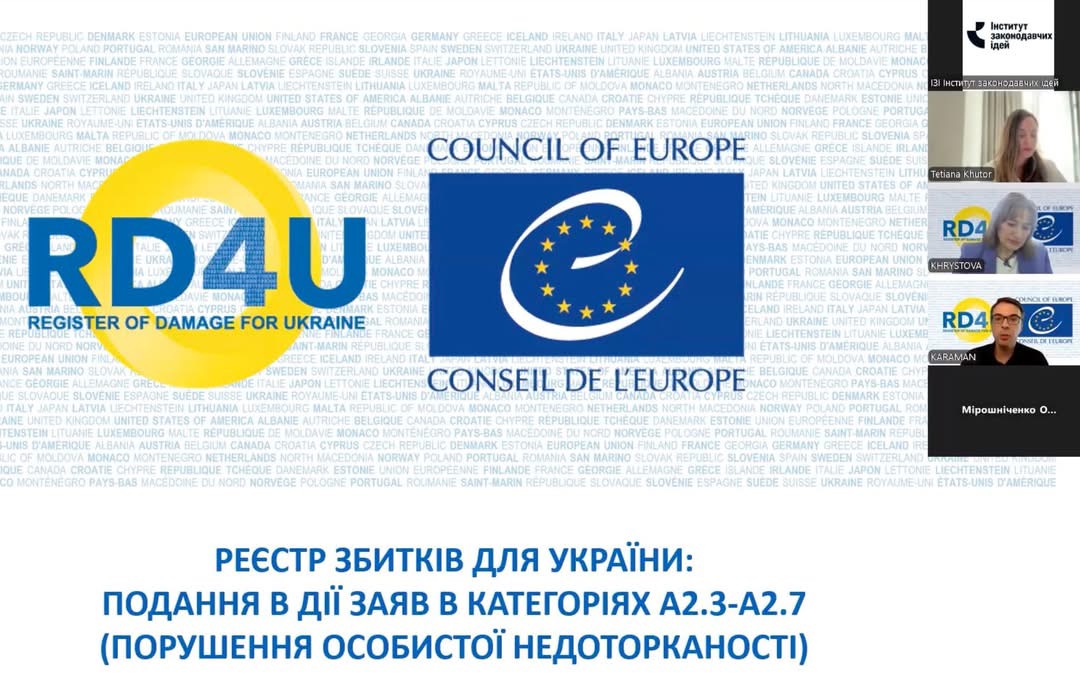
In conclusion, ILI emphasized that difficulties in navigating national procedures, or the absence of a particular status, should not deter victims from applying to the Register of Damage for Ukraine. Therefore, difficulties in formalizing war-related disability should not be perceived as an obstacle to applying to the Register.
This publication was compiled with the International Renaissance Foundation within the framework «Building the Capacity of Victims to Document Damage and Access RD4U» project. Its content is the exclusive responsibility of the authors and does not necessarily reflect the views of the International Renaissance Foundation.