


Wounded by war, but unprotected: Why civilians get lost in the system
Source: Mirror Weekly
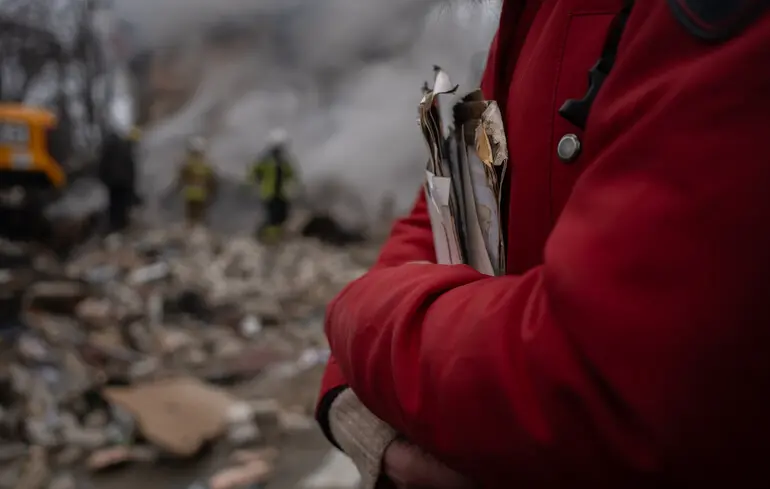
Strike – Injury – Disability. The scale of health damage sustained by Ukraine's civilian population is growing relentlessly: according to estimates by the UN Human Rights Monitoring Mission in Ukraine, in 2025 alone, 12,142 civilians were wounded as a result of attacks by the aggressor state – 31% more than in 2024 and 70% more than in 2023.
The state guarantees individuals who have become disabled as a result of the war a 30-50% supplement to pensions and other social payments, as well as a range of other benefits. By this year's Independence Day, such individuals will additionally receive a one-time payment of between 2,700 and 3,100 hryvnias depending on the disability group.
But is it easy to document health damage and acquire the corresponding status? The answer to this question was provided by the Institute of Legislative Ideas think tank in its study. To obtain the status of a person with war-related disability, a civilian must go through a complex, multi-stage procedure. The scale of the problem is evident from the numbers – from 2022 to 2025, only 1,437 civilians submitted the relevant applications.
Share analytics

Share in media
- Telegram

Chapter І

What the procedure for obtaining status actually looks like for civilians
To obtain the status of a person with war-related disability, a civilian must go through five stages. Formally, this procedure appears as a logical sequence: documenting the circumstances of the injury, collecting medical records, establishing disability, proving the connection between the injury and the war, and then submitting an application for status.
In practice, however, the system works differently.
Stage One: Hospital
After being wounded, the victim is taken to a medical facility. This is where the initial body of evidence is formed – and this is where the system may experience its first failure. Doctors often record only the nature of the injury ("fracture," "traumatic brain injury") without indicating its cause – "as a result of a mine-explosive device," "during hostilities." Without this link between the injury and the war, the subsequent establishment of war-related disability becomes significantly more difficult.
Particular problems affect individuals who were wounded in temporarily occupied territory. It may take them weeks or months to reach a hospital in territory under Ukrainian control. During this time, victims often receive initial care in facilities under the occupation administration's control, and therefore have no medical documents recognized by the Ukrainian system.
Due to a delayed examination, establishing the precise cause of the injury becomes more difficult. Some circumstances may go entirely undocumented, making the subsequent procedure more complicated from the very outset.
In practice, there is a known case in which a man sustained a shrapnel wound during the shelling of a village, losing part of his foot as a result. With no transport available, he was only able to reach a hospital a month later. Medical staff treated the wound but made no mention of a shrapnel injury in the discharge summary. This proved sufficient to complicate the entire subsequent procedure.
Stage Two: Criminal Proceedings
The next mandatory document is an extract from the Unified Register of Pre-Trial Investigations (URPTI). It must confirm that the person's injury is connected to a specific war crime: shelling, mining, or another type of attack.
To obtain it, the victim must approach law enforcement on their own initiative. But a person in serious physical or psychological distress is often simply unable to do so. There have been cases where a hospital failed to notify the police of the hospitalization of a person wounded in a shelling, and the application was only filed a year after the injury.
Problems also arise when proceedings are opened not at the victim's initiative but at that of an investigator or prosecutor. In such cases, a person cannot always obtain an extract automatically, and the secrecy of the pre-trial investigation prevents it from being passed on to other authorities for the purpose of obtaining status.
Even if the victim has done everything correctly, the problems do not end there. Information may be entered with a delay, recognition as a victim may be refused, and the extract that is issued may contain only general information without details of the specific case. This happens in "consolidated cases" involving hundreds of victims: law enforcement issues an extract covering only the first pages of the proceedings, where the specific individual simply does not appear. Formally, a document exists – but it is of almost no help in subsequently obtaining status.
Stage Three: ECOPFO
From the beginning of 2025, the Medical and Social Expert Commissions (MSEC) were replaced by Expert Teams for the Assessment of Daily Functioning (ECOPFO). These are the bodies that establish disability. In practice, however, this process can take significantly longer than the prescribed 30-day period, often due to incorrectly prepared initial medical documents.
It is important to understand that at this stage the person is assessed for the fact of disability on general grounds. This is not yet the status of a person with war-related disability, which provides access to additional support and benefits for those who suffered specifically as a result of hostilities. A further step is required to obtain it.
Stage Four: The Interdepartmental Commission
Following the ECOPFO decision, the victim must apply to the Interdepartmental Commission under the Ministry of Veterans' Affairs. It is this body that confirms what is central to the entire procedure: that the health damage was sustained as a result of explosive ordnance in connection with the war.
The Commission issues its decision on the basis of a complete package of documents. If any document is missing or improperly prepared, the person risks receiving a refusal.
One of the mandatory documents is a forensic medical examination conclusion. This is typically ordered by an investigator or prosecutor within the framework of criminal proceedings, and the victim may only submit a corresponding petition. In practice, such petitions are frequently ignored, delaying the procedure by months. Residents of rural communities are particularly vulnerable here, as they are unable to maintain regular contact with law enforcement or personally monitor the progress of their case.
Even after the examination is ordered, conducting it may take anywhere from one to four months due to the workload of expert institutions. And the resulting conclusion is not always of adequate quality: errors in personal data or inaccuracies occur that then have to be corrected all over again. The law permits a private examination to be commissioned, but for a victim this represents an additional financial burden that should not serve as a substitute for resolving a systemic problem.
The statistics on Interdepartmental Commission decisions reveal the critical importance of complete documentary evidence. In 2022–2025, out of 347 refusals, 221 were issued due to the absence of documents confirming the very fact of the injury. In other words, more than 63% of refusals are linked specifically to the lack of a forensic medical examination conclusion or other supporting materials.
There are other problematic grounds for refusal as well. For example, Procedure No. 306 permits a refusal if, within the framework of criminal proceedings, the authorized body concluded that no elements of a criminal offense were present. However, such a procedural decision does not negate the fact of health damage itself and should not automatically block a person's access to status and the associated benefits.
A separate risk lies in the provisions concerning individuals who were members of Russian Federation armed formations, the occupation administration, or illegal armed groups. The purpose of this prohibition is clear – to prevent the granting of benefits to those who voluntarily participated in the aggression. But it does not account for cases of forced conscription into Russian forces on temporarily occupied territories.
Finally, the Commission may revoke its own positive decision, with no time limit for doing so. A person may consider themselves protected for years, only to suddenly lose their status.
Stage Five: Changing the Basis of Disability
Even after a positive decision by the Interdepartmental Commission, the procedure is not complete. The victim or their representative must deliver this decision to the doctor who referred them to ECOPFO. Following this, ECOPFO has five working days to change the basis of the disability. The documents must now record that it arose as a result of the war – it is precisely this that opens the path to obtaining the corresponding status and its associated benefits.
However, errors are possible even at this final stage. Victims may have the basis of their disability recorded incorrectly, or a formulation may be chosen that does not provide grounds for obtaining the status of a person with war-related disability.
As a result, a person who has already gone through the hospital, criminal proceedings, ECOPFO, and the Interdepartmental Commission is once again forced to correct their documents and prove the connection between their injury and the war.
Chapter ІI
What the procedure for obtaining status actually looks like for civilians
Countries that have long grappled with the consequences of armed conflicts have developed more flexible approaches.
In Israel, the principle of "presumption of hostile action" applies: if the circumstances of an injury give grounds to consider it a consequence of hostile action, it is treated as such unless proven otherwise. At the same time, a person may receive medical assistance and rehabilitation even before disability is officially established, already at the application review stage.
In Croatia, if a person is unable to obtain a certificate confirming the cause and circumstances of the injury, alternative evidence is permitted: medical documentation from which the circumstances of the injury are apparent, information from the prosecutor's office, or other documents from competent authorities.
The UN Compensation Commission for Iraq and Kuwait accepted even medical documentation compiled after the event as sufficient evidence. The Commission took into account that during the occupation, medical infrastructure had been effectively destroyed. In lieu of documents, witness testimony or personal statements from the applicant could be accepted.
A similar logic of flexible approach has already been embedded in the operating principles of the international Register of Damage caused by the Aggression of the Russian Federation against Ukraine. This is the first element of a future international compensation mechanism, which documents claims, evidence, and information about harm, losses, and damages caused as a result of the full-scale invasion. To submit an application to the Register under category A2.3 "Serious Personal Injuries," a person does not need to already hold the status of a person with a disability or a person with war-related disability. A victim may submit whatever evidence and documents they have at the time of application, and subsequently supplement the application with new materials. Difficulties with national procedures are not a reason to delay applying to the Register.
What is common to all of these approaches – and this is precisely what is key for Ukraine – is that obtaining victim status should not depend critically on criminal proceedings or the procedural documents generated within them.
Chapter ІII
What needs to change
A study by the Institute of Legislative Ideas think tank, presented on May 8, 2026 during an online discussion with the participation of government representatives, the international Register of Damage, human rights organizations, and victims, proposes three key changes to improve the national mechanism for documenting health damage and establishing war-related disability status.
Reduce the procedure's dependence on criminal proceedings. A forensic medical examination conclusion and an extract from the URPTI should not be the sole or unconditionally mandatory evidence of the fact of injury. A decision should be based on a comprehensive assessment: medical data, the circumstances of the event, available documents, and in certain cases – alternative evidence confirming the nature of the injury and the conditions under which it was sustained. Such an approach would make it possible to move away from excessive formalism and place not a perfectly assembled package of documents, but the rights of the victim, at the center of the procedure.
Revise the grounds for refusal. In particular, the ground relating to the "absence of elements of a criminal offense" should be removed. A procedural decision by the prosecution should not automatically deprive a person of the ability to confirm the fact of health damage. And the provision on refusal for those who were members of Russian Federation armed formations should be clarified: it should not extend to those who were forcibly mobilized and who sustained injuries as a civilian after returning to territory under Ukrainian control.
Establish a clear deadline for revoking previously issued decisions of the Interdepartmental Commission. These provisions should be aligned with the Law of Ukraine "On Administrative Procedure." This would give victims greater legal certainty and protect them from situations where a confirmed status or access to benefits could be called into question years after a decision was issued.
Proper documentation of health damage is not merely a matter of social protection. It is the foundation for documenting the scale of suffering that Russia has inflicted on Ukraine's civilian population, and for future international justice. Every undocumented case is a lost piece of evidence.
This material was prepared with the support of the International Renaissance Foundation. The publication represents the views of the authors and does not necessarily reflect the position of the International Renaissance Foundation.