


>
Articles>
Division of the Poroshenko couple's property: Why it's not European-style, and what an EU directive has to do with itDivision of the Poroshenko couple's property: Why it's not European-style, and what an EU directive has to do with it
Source: European Pravda
For almost a year and a half now, draft law No. 12406, which introduces penalties for violating and circumventing sanctions, has been gathering dust in the Verkhovna Rada – despite the president having submitted it in January 2025 as urgent.
And this isn't just about formally fulfilling a European integration requirement and introducing fair punishments for violators. After harmonizing Ukrainian legislation with the EU Directive on criminalizing sanctions violations, Ukraine could more actively join cross-border investigations and pursue the seizure of assets linked to sanctions violations – for example, the arrested vessels of the "shadow fleet."
The European Union already has an effective system in which sanctions violations can be subject to criminal prosecution, and assets can be frozen and confiscated. In Ukraine, however, the corresponding mechanisms still haven't started working. And yet a country at war should be the one most interested in making sanctions as effective and painful as possible for the aggressor and its accomplices. The story of the Poroshenko couple's property division became a clear test for this system.
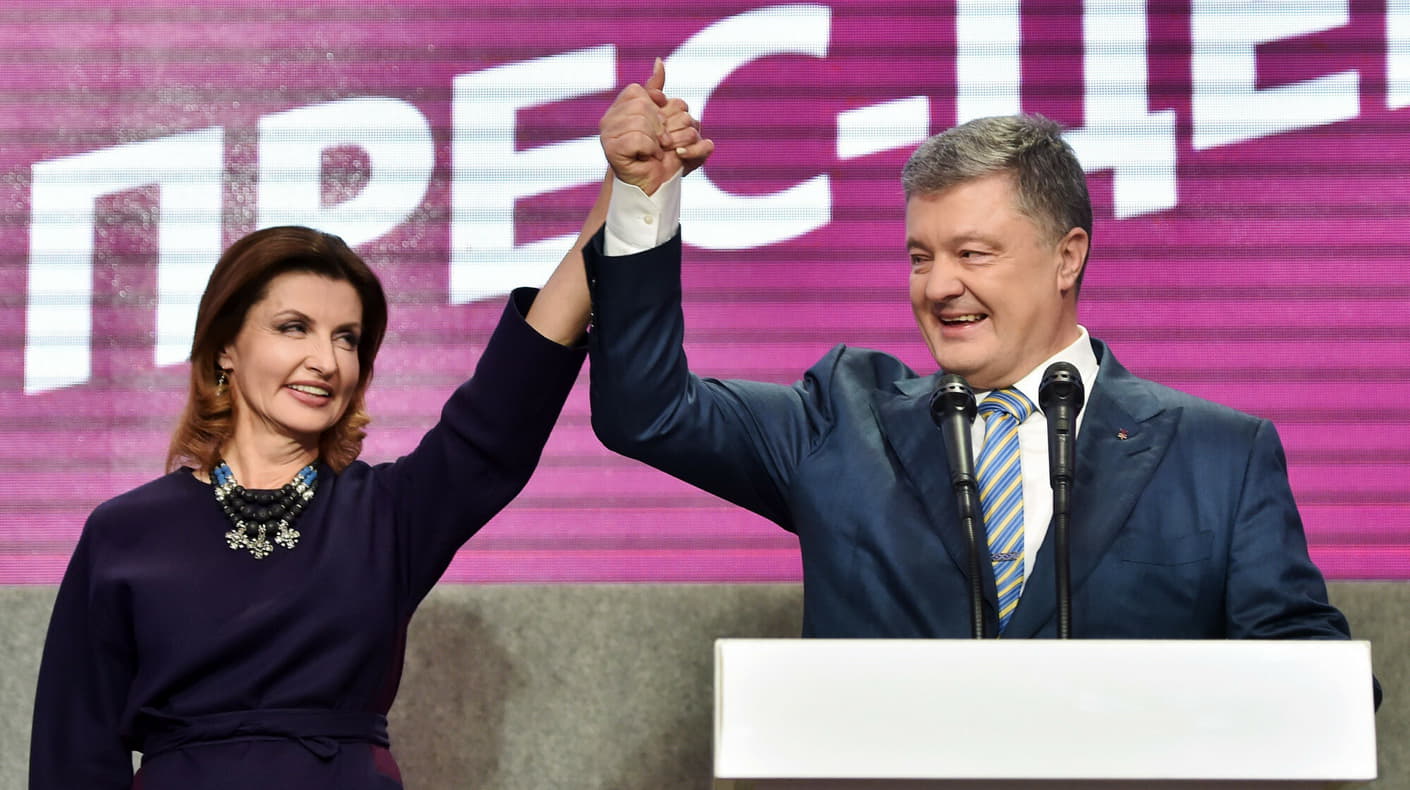
After personal sanctions were applied to the former president, all his assets came under a freeze. The ban on disposing of property and accounts automatically extended to assets jointly held with his wife. However, the Poroshenko couple managed, through the courts, to effectively circumvent these restrictions and divide the property.
I'll stress that this piece doesn't address the question of whether the restrictions placed on Petro Poroshenko's assets are fair – using this case as an example, we're examining the gaps in sanctions policy.
That is, the shortcomings in Ukrainian legislation on sanctions policy and its non-conformity with European norms, which allow sanctioned individuals to move billions of hryvnias out from under the restrictions.
Currently, this can be done in several ways. For example, by disguising operations as entirely lawful actions: fulfilling a contract or court ruling, or creating artificial debt followed by the bankruptcy of a controlled enterprise.
Does the story of the Poroshenko couple's property division actually show signs of sanctions evasion – or does it merely demonstrate the gaps in Ukraine's sanctions system? And why does Ukrainian legislation still lag behind the European approach to implementing sanctions and combating their violation? Let's break it down.
Share analytics

Share in media
- Telegram

Chapter І

Circumstances of the Case
In 2025, the National Security and Defense Council (NSDC) imposed personal sanctions on former president Petro Poroshenko. His wife Maryna, who is not under sanctions, could not dispose of the property jointly owned with her husband. So she went to court to have "her" share separated and to unblock assets worth over 8 billion hryvnias.
The court helped the couple do this, though not on the first attempt.
At first instance, they were denied. The judge classified the filed claim as fraudulent (from the English "fraud") – that is, filed not to resolve a genuine dispute between the spouses, but to artificially remove assets from under sanctions and from seizure in a criminal proceeding.
The finding of fraudulence is further reinforced by two telling facts. First, the property division was initiated without divorce – that is, the couple remains married, but decides to officially separate their assets now. Second, the husband-defendant admitted the claim. All of this only strengthens the impression that the court proceeding was used solely as a legal tool to bypass sanctions restrictions.
Under the law, any disposal of assets must be frozen for as long as the sanction is in effect. This applies to operations dividing jointly acquired marital property as well. However, at the appellate level, the Poroshenkos managed to secure the opposite ruling.
On April 20, 2026, the Vinnytsia Court of Appeal divided the jointly acquired property between the Poroshenko couple: 8.5 billion hryvnias each. This ruling rests on fairly well-argued grounds – and at the same time demonstrates just how imperfect Ukrainian sanctions legislation is.
Chapter ІI
Why Did the Appellate Court Divide the Property?
The Vinnytsia Court of Appeal's ruling rests on a sound thesis: third parties (not under sanctions) whose interests may be harmed by the application of sanctions don't have effective procedural mechanisms of protection in Ukraine. In other words, sanctions hit not only their target – they can cause "collateral damage" to bona fide persons who had nothing to do with the grounds for their imposition. And there are no special mechanisms to correct this situation.
According to the court's logic, sanctions were applied to the former president, but in doing so they also "touched" his wife – a person who herself is not under restrictions. This logic isn't without merit in its general sense.
The problem of protecting bona fide third parties from the collateral effects of sanctions is real and relevant. This problem is also recognized at the EU level.
In particular, the EU Court in the case Mazepin v. Council (Case T-743/22) clearly stated that the mere fact of family ties is not sufficient grounds for applying sanctions – an economic connection between the person and the sanctioned subject must be established.
So the idea that legislation should include mechanisms allowing bona fide persons to protect their interests is entirely fair. But in this particular case, it appears to have been used as a tool for achieving a completely different goal.
Chapter ІII
The Risk of "Strawman" Owners
Sanctioned individuals quite often use "strawman" owners specifically to retain actual control over assets. And this shouldn't be overlooked.
It's worth pausing here on a principle that has long become axiomatic in sanctions law – sanctions extend not only to assets where the sanctioned person is the formal owner, but also to those over which they actually retain control. Regardless of whose name is listed in the title documents or relevant registries.
This position was recently reaffirmed by the EU Court in case C-84/24 (UAB "EM SYSTEM" v AB SEB bankas and AS "Citadele banka" Lietuvos filialas): the concepts of "holding" and "control" of assets must be interpreted broadly, taking into account both direct and indirect ways of influencing the disposal of funds and economic resources.
Ukraine's High Anti-Corruption Court (HACC) develops a similar approach. So if the blocked assets of a sanctioned husband can be divided as jointly acquired marital property and formally cease to be his property – this creates a significant risk. The wife could become a strawman through whom the husband retains actual control over the assets – and at the same time regains the ability to dispose of them, despite the sanctions applied.
Chapter IV
Flaws in the Sanctions Architecture
The Poroshenko couple's case clearly demonstrates at least three systemic gaps in Ukrainian sanctions legislation.
First. Ukraine still lacks norms that would directly establish personal liability for violating or circumventing sanctions.
In the EU, back in April 2024, Directive 2024/1226 was adopted, obligating member states to criminalize the circumvention of sanctions. Ukraine still has no similar legislation.
Draft law No. 12406 on criminalizing sanctions violations and evasion has been sitting in parliament awaiting its second reading for a year now, despite having been submitted by the president as urgent. The explanatory note to the draft law specifically emphasizes that, given Ukraine's status as an EU candidate country, the proposed changes would additionally help adapt Ukrainian legislation to the EU's legal system.
Second. Currently, there's no way to allow a sanctioned person to partially use funds for urgent needs.
Ukraine lacks an equivalent of the special authorizations mechanism widely used in the EU, the US, and the UK. This tool allows competent authorities, under certain conditions, to permit the unfreezing of part of the assets – for example, to meet the basic needs of the sanctioned person or their family members: paying for food, rent, medical services, legal assistance. Research by the ILI Analytical Center showed that without such a mechanism, it's impossible to ensure a fair balance between the public interest in economic countermeasures against the enemy and private interests in protecting fundamental human rights.
Regarding cases similar to the Poroshenko couple's situation, the EU has a clear rule – dividing property is possible, but only with a special permit, meaning subject to verification that such an operation won't allow the sanctioned person to gain economic benefit or control over the asset.
Third. The fairness of applying sanctions restrictions.
The mechanism for appealing sanctions in Ukraine remains ineffective. In the case of TOV M.S.L. v. Ukraine, the European Court of Human Rights (ECHR) found that Ukrainian courts, following the position of the Grand Chamber of the Supreme Court, do not review the actual justification for applying sanctions. The most important question – "Were there grounds for imposing them at all?" – remains without judicial assessment. The ECHR found this to be a violation of Article 1 of Protocol 1 (right to property) and Article 13 of the Convention (lack of an effective remedy). The court emphasized that even in cases related to national security, the state cannot act without independent judicial oversight.
* * * * *
Although the specific case of the property division between the Poroshenko couple should most likely be classified as sanctions evasion, it highlights systemic flaws in Ukrainian sanctions legislation that need urgent resolution. At the same time, the question of whether the imposition of these personal sanctions was justified in the first place remains open – an answer to which the Supreme Court may provide in the near future.
The task facing parliament and government bodies isn't to make sanctions harsher for their own sake. The task is to build a full-fledged sanctions architecture: with criminalization of circumventing restrictions, with mechanisms to protect bona fide third parties, with real special-authorization procedures, and, most importantly, with effective judicial oversight over the validity of the sanctions themselves.
Without this, restrictive measures will remain either too harsh where it's unjust, or too soft where it's dangerous. And the courts, instead of being guarantors of the rule of law, risk becoming its weak link.